Built-In Single Ovens
DO and SO-series wall ovens, 30" and 36", with electric convection cavities.
Wolf Ovens
Built-in singles, double walls, convection steam and the ovens under Wolf ranges — different cavities, the same short list of parts behind most faults. Our Wolf technician finds which one before ordering anything.
Coverage
Wall ovens, double stacks, steam and speed cavities, and the ovens built into Wolf ranges. If your model isn't listed, call anyway — the fault matters more than the badge.
DO and SO-series wall ovens, 30" and 36", with electric convection cavities.
Two stacked cavities, each with its own controls, elements and sensor.
CSO-series steam cavities, including water reservoir and steam generator faults.
Combination cavities that cook with microwave and convection in one unit.
Gas and dual fuel range ovens — see our range repair page.
Integrated warming drawers with their own element, thermostat and controls.
Units well past warranty, where parts have to be sourced rather than pulled off the van.
What We Fix
Tell us which of these matches on the phone. On a Wolf oven the symptom usually narrows the diagnostics down to the element, the sensor or the control before our technician reaches your address.
On an electric cavity that's the bake element or the relay that feeds it; on a gas oven, the igniter or the safety valve. Controls that light up normally rule out half the list immediately.
A weak igniter that no longer draws enough current to open the valve, or an element working at part power. The oven still heats, which is exactly why this one gets ignored for months.
The oven heats, just not to the number on the display. Temperature sensor, a drifted control board, or a door seal that's letting heat out.
Broil element or igniter, or the relay switching it. Uneven browning across the pan is the tell that half the circuit is dead.
Grinding and rattling is a worn motor bearing; a fan that never spins is the motor, its relay or the board commanding it. Either way convection baking stops being convection.
Control board, display module, or the supply feeding the oven. Write the code down before you call — it saves a good part of the diagnostics.
The door lock motor and its switch do the work here. An oven stuck locked after a clean cycle is a lock assembly job, not a reason to force the door.
On a double wall oven each cavity has its own elements, sensor and relays. A working lower oven proves the supply is fine and points everything at the cavity that quit.
Describe what the oven does and when. Most Wolf faults are identifiable over the phone in a couple of minutes.
Recent Repairs
Real Wolf ovens, real faults, real replaced parts. Each of these repairs started as a call that sounded like the symptom you probably have right now.
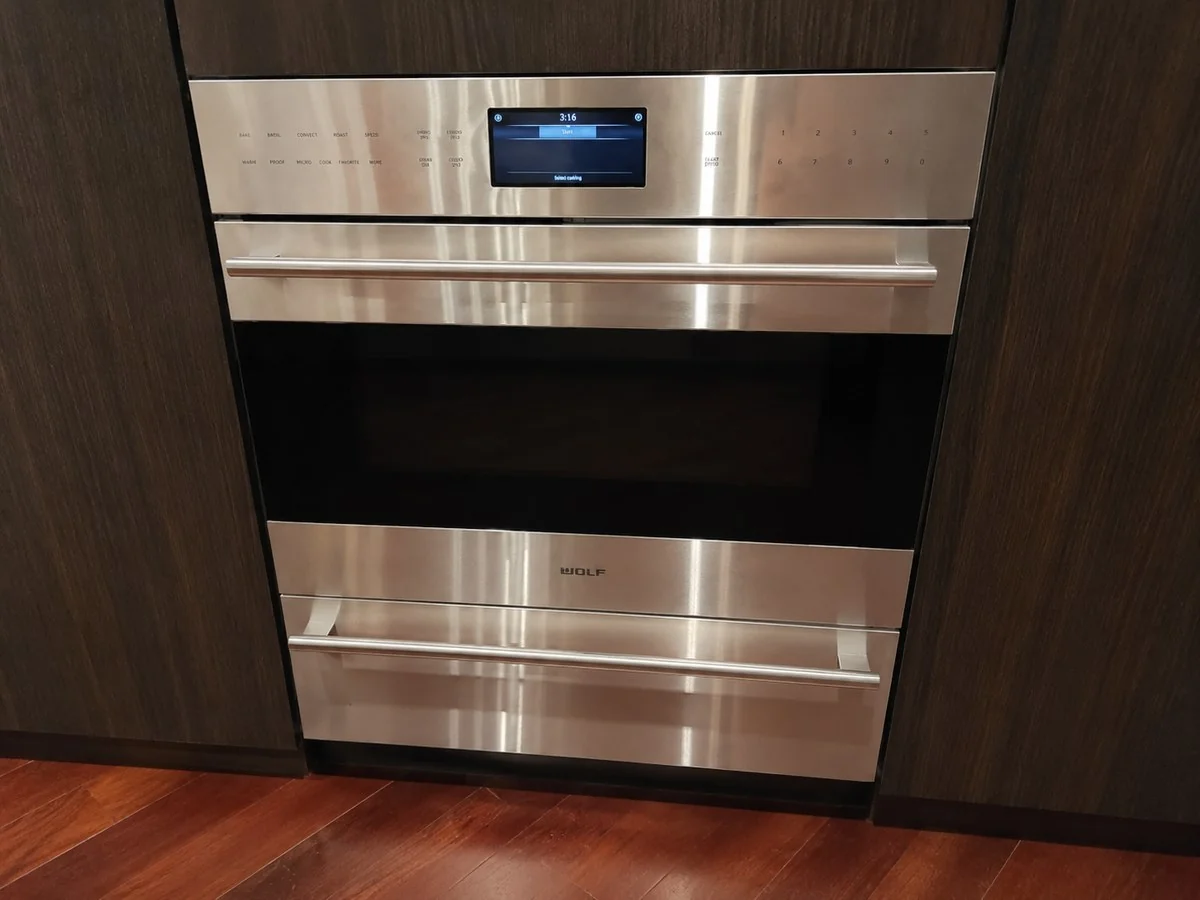
An oven that goes dead after an outage can be the control system, internal electrical components, wiring, fuse protection or the supply feeding it. Checking the circuit before the appliance is what keeps this from becoming a control-board quote.
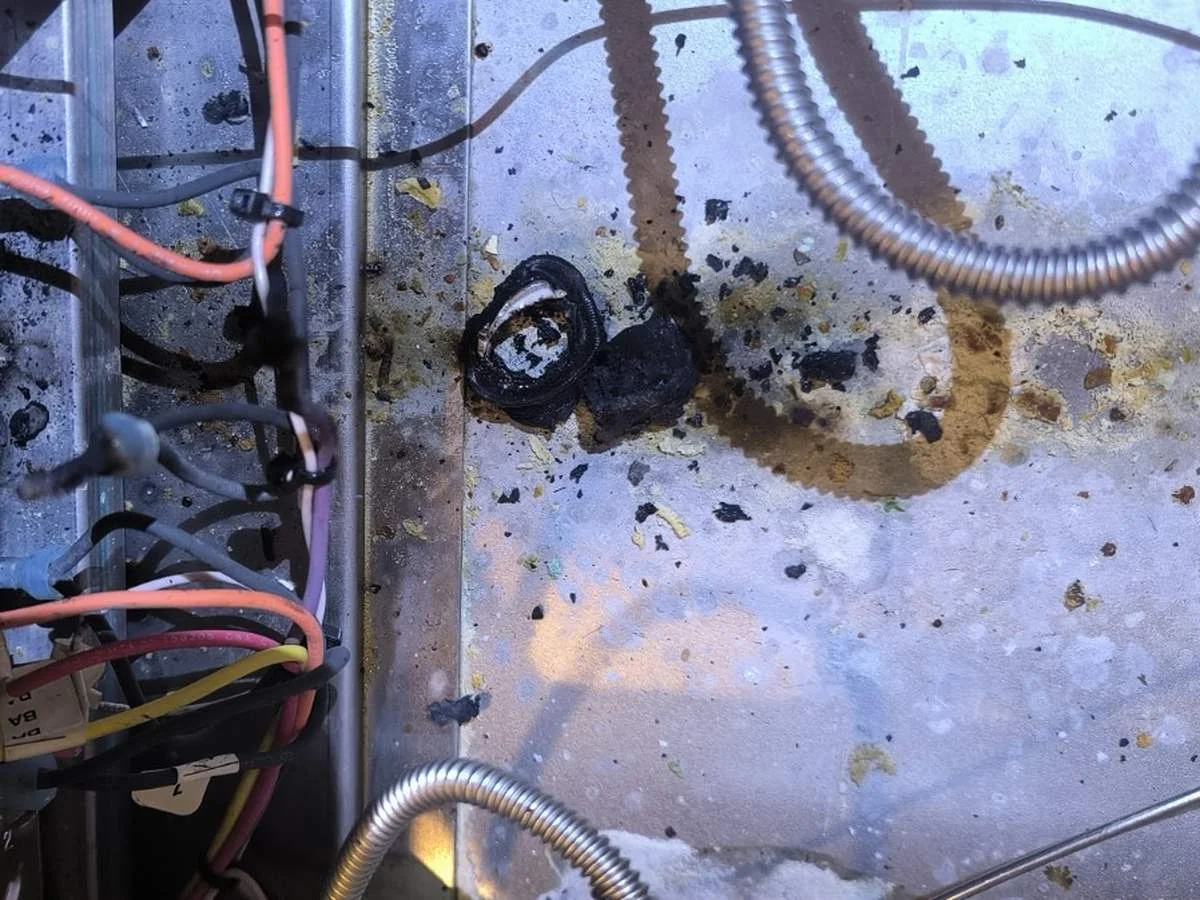
The photo is what we found behind the panel: the contact and its insulation had cooked through. Damage like this is never just the fan — the wiring and switching around it have to be replaced before convection can be used again.
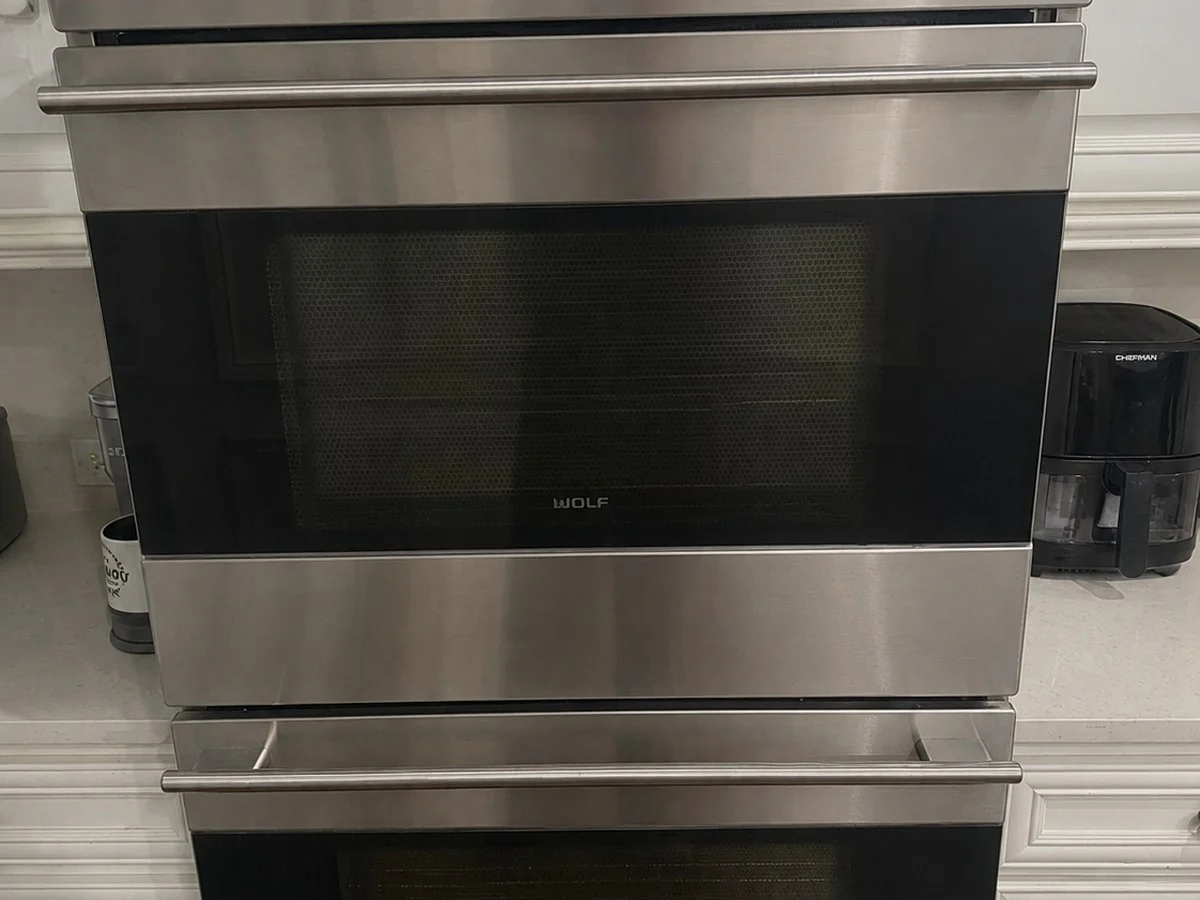
When one cavity works and the other doesn't, everything shared between them is ruled out on the spot. What's left is that oven's own control, bake element, relay, wiring or temperature sensor.
Book It
Call and describe the symptom — not heating, wrong temperature, error code — or leave your number and a dispatcher will call you back with a time window.
Service Areas
We repair Wolf oven built-ins across these metro areas, with same-day appointments in most of them when you call before noon.
Don’t see your city? Call (404) 474-1374 and we’ll tell you whether we reach you.
Pricing
No hidden fees, and nothing starts until you approve a firm quote.
Other Appliances
Questions