Undercounter Ice Makers
UC-15I and UC-15IO units built into islands, bars and butler's pantries.
Sub-Zero Ice Makers
An ice maker is a small refrigerator with plumbing inside it — water in, cold, harvest, drain. When the bin stays empty, one of those four steps stopped, and our Sub-Zero technician finds which before ordering a part.
Coverage
Undercounter units, clear-ice models, panel-ready fronts and the ice makers built into refrigerators and freezers. If your model isn't listed, call anyway — the fault matters more than the badge.
UC-15I and UC-15IO units built into islands, bars and butler's pantries.
Gourmet clear ice units, where water circulation and cycle timing decide the cube.
Units hidden behind cabinet panels, where access is planned before anything moves.
Ice makers installed in outdoor kitchens, with their own drain and supply issues.
Built-in fridge and freezer ice makers, including dispenser models.
Installations that pump waste water uphill, where the pump is its own failure point.
Units well past warranty, where parts have to be sourced rather than pulled off the van.
What We Fix
Tell us which of these matches on the phone. On a Sub-Zero ice maker the symptom usually says whether the fault is water, cooling or the harvest cycle before our technician reaches your address.
Water isn't arriving, or the unit isn't getting cold enough to freeze it. The inlet valve, the supply line and the sealed system are the first three things we separate.
The unit thinks it's working. Usually water is going in but the harvest never completes — a stuck cycle, a sensor, or ice never releasing from the plate.
Half the ice it used to make, or cubes that come out thin and hollow. Water pressure, a clogged filter, a weak pump, or a condenser that can't shed heat.
Drain line blocked or disconnected, a leaking inlet fitting, or meltwater with nowhere to go. Worth a call quickly — cabinetry absorbs it before you see it.
The bin isn't holding temperature, or the harvest is dumping wet ice. Door seal, bin thermostat, or a drain that's letting melt refreeze.
Filter overdue, scale on the evaporator plate, or a cleaning cycle that hasn't been run in years. Often a service rather than a repair.
The drive mechanism or the pump. A unit that got noisy shortly before it stopped making ice is telling you exactly where to look.
Not a fault by itself, but ignored long enough it becomes one — restricted water starves the cycle and production quietly drops.
Describe what the ice maker does and when. Most Sub-Zero faults are identifiable over the phone in a couple of minutes.
Recent Repairs
Real Sub-Zero ice makers, real faults, real replaced parts. Each of these repairs started as a call that sounded like the symptom you probably have right now.
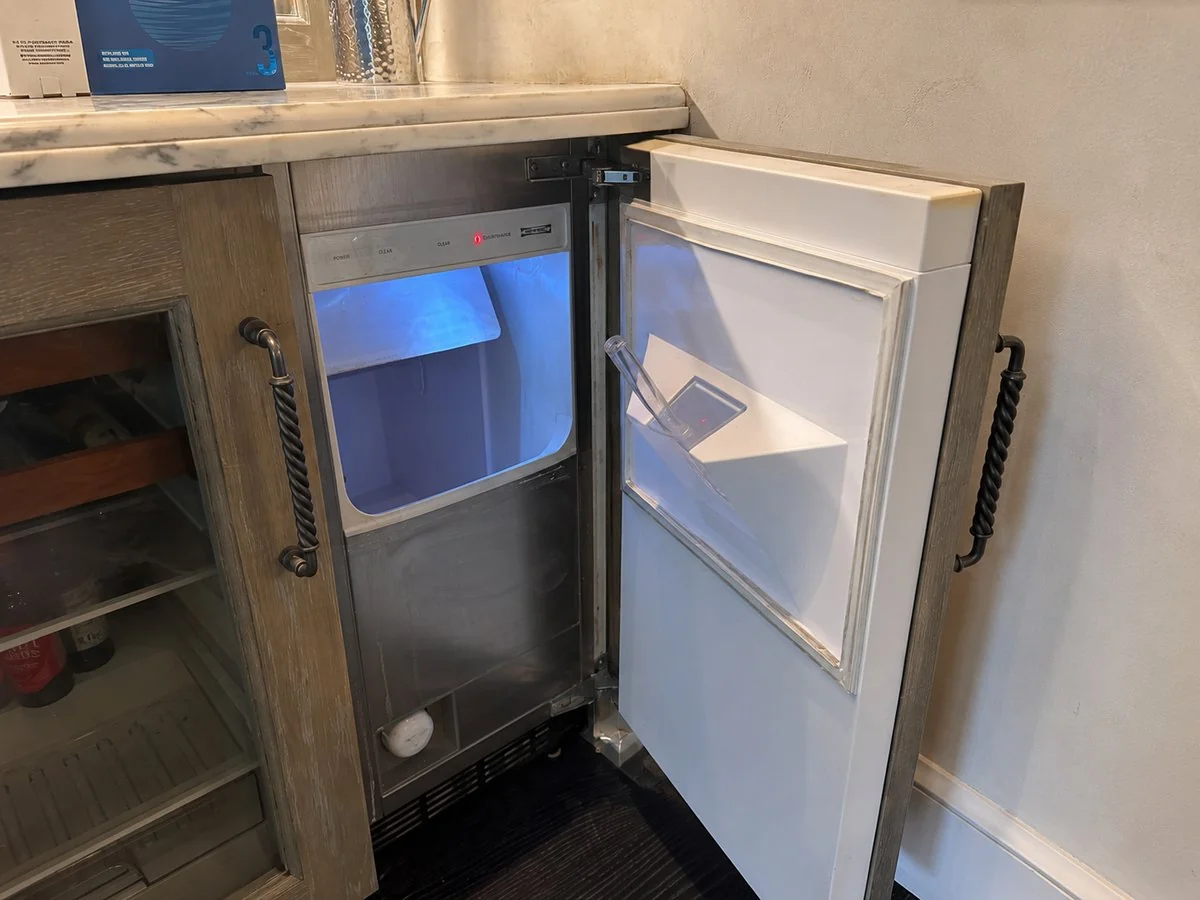
Noise before a failure is the most useful symptom an ice maker gives you. It says the fault is mechanical — motor, drive, pump — and it saves a day of chasing water and sensors that were never the problem.
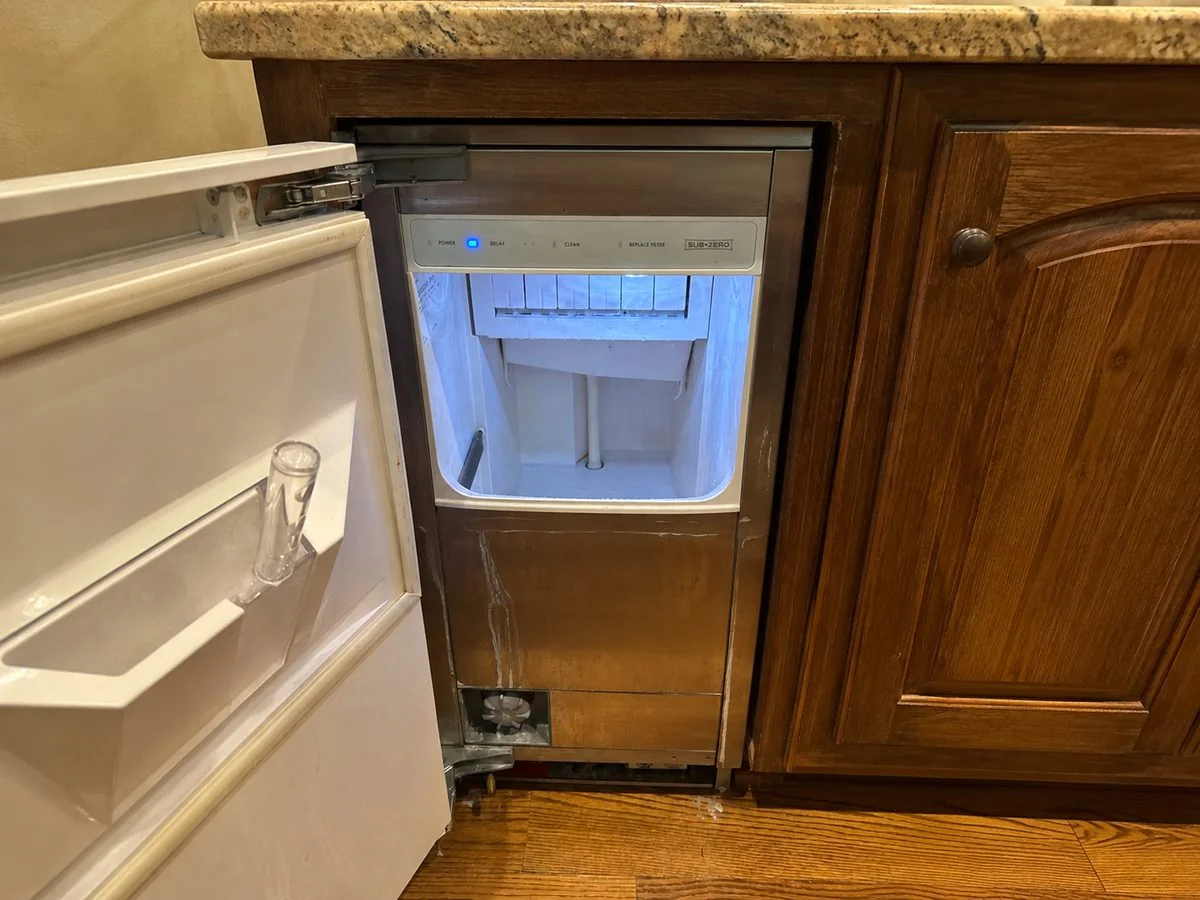
The photo is what an ice maker actually depends on: a supply line in and a drain line out. Half the "it stopped making ice" calls we take end at one of those two hoses, not inside the appliance.
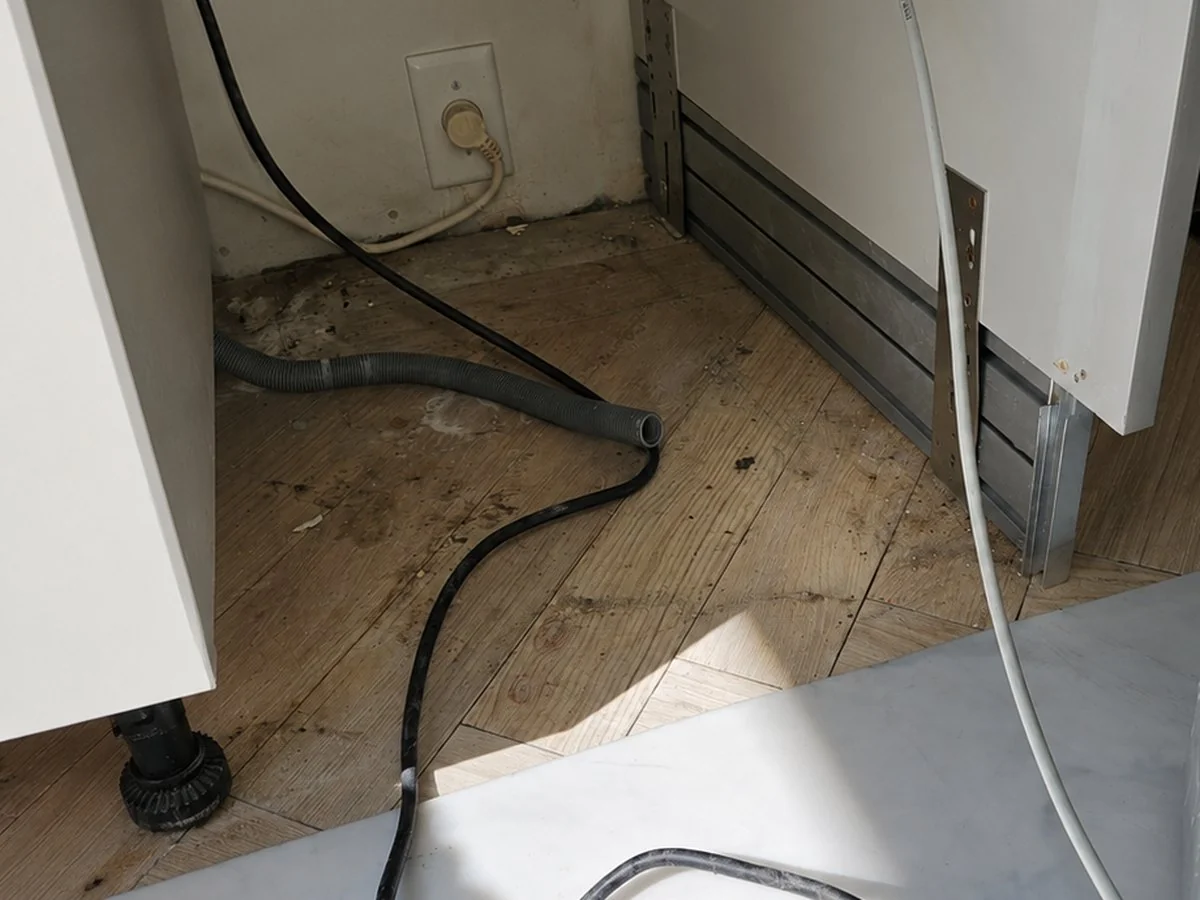
The photo shows the finished job: a full slab of cubes on the evaporator plate, ready to harvest. A unit that hums along without making ice is the harder call — nothing is obviously broken, so every step of the cycle has to be measured.
Book It
Call and describe the symptom — no ice, low production, water on the floor — or leave your number and a dispatcher will call you back with a time window.
Service Areas
We repair Sub-Zero ice maker built-ins across these metro areas, with same-day appointments in most of them when you call before noon.
Don’t see your city? Call (404) 474-1374 and we’ll tell you whether we reach you.
Pricing
No hidden fees, and nothing starts until you approve a firm quote.
Other Appliances
Questions