Gas Sealed-Burner
CG-series gas cooktops, including dual-stacked sealed burners and continuous grates.
Wolf Cooktops
Gas, electric and induction — three different machines behind the same brand plate, with three different failure patterns. Our Wolf technician runs the diagnostics before touching a part.
Coverage
All three heat sources, framed and unframed, current models and units that went in fifteen years ago. If your model isn't listed, call anyway — the fault matters more than the badge.
CG-series gas cooktops, including dual-stacked sealed burners and continuous grates.
CT-series electric glass cooktops with radiant elements and touch controls.
CI-series induction cooktops, including bridge zones and boost-equipped models.
Stainless-framed drop-ins and flush-mounted glass installations.
Cooktops paired with integrated downdraft ventilation.
Same burner and ignition hardware — see our range repair page.
Units well past warranty, where parts have to be sourced rather than pulled off the van.
What We Fix
Tell us which of these matches on the phone. On a Wolf cooktop the symptom usually narrows the diagnostics down to one of two or three parts before our technician reaches your address.
Spark is arriving, gas is not — or the spark is going somewhere it shouldn't. Usually a valve switch, the igniter electrode, or a burner cap sitting crooked after cleaning.
The flame-sensing side isn't confirming ignition, so the valve shuts itself off. Almost always the thermocouple or the switch behind that specific knob.
On induction this points at the control board or a power module; on gas, at the switch cluster or the spark module. Either way it is one shared component, not four separate failures.
Before assuming the worst: the outlet, the connection behind the unit and the breaker are all on the suspect list — and they are the cheapest thing on it. We check the supply first.
Moisture under the glass, a failing touch membrane, or the control board. Panels that respond when cold and stop when hot point firmly at the board.
Power module, cooling fan, or a thermal sensor shutting the zone down to protect itself. Pans that suddenly stop being recognised belong here too.
Burner ports blocked, cap misaligned, or the air-to-gas mix off. Worth fixing quickly — a yellow flame soots the pans and wastes gas.
The valve stem behind it is worn. Left alone, the knob eventually turns without the valve following — which is a safety problem, not an annoyance.
Describe what the cooktop does and when. Most Wolf faults are identifiable over the phone in a couple of minutes.
Recent Repairs
Real Wolf cooktops, real faults, real replaced parts. Each of these repairs started as a call that sounded like the symptom you probably have right now.
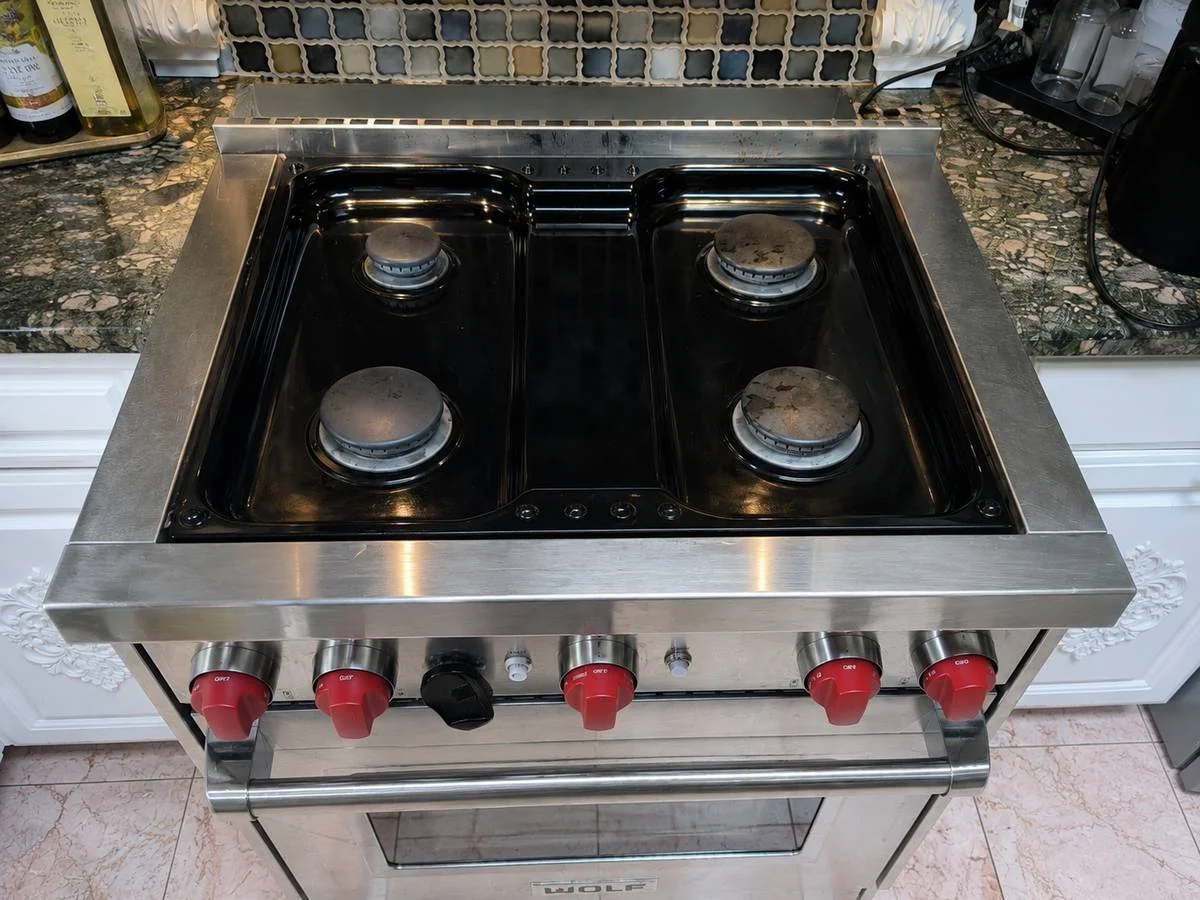
Same sealed-burner and ignition hardware Wolf uses on its cooktops. A unit that clicks without lighting, sparks intermittently, or doesn't spark at all usually comes down to the valve switches, the igniter or the wiring — and diagnosing it properly is what stops parts being replaced on a guess.
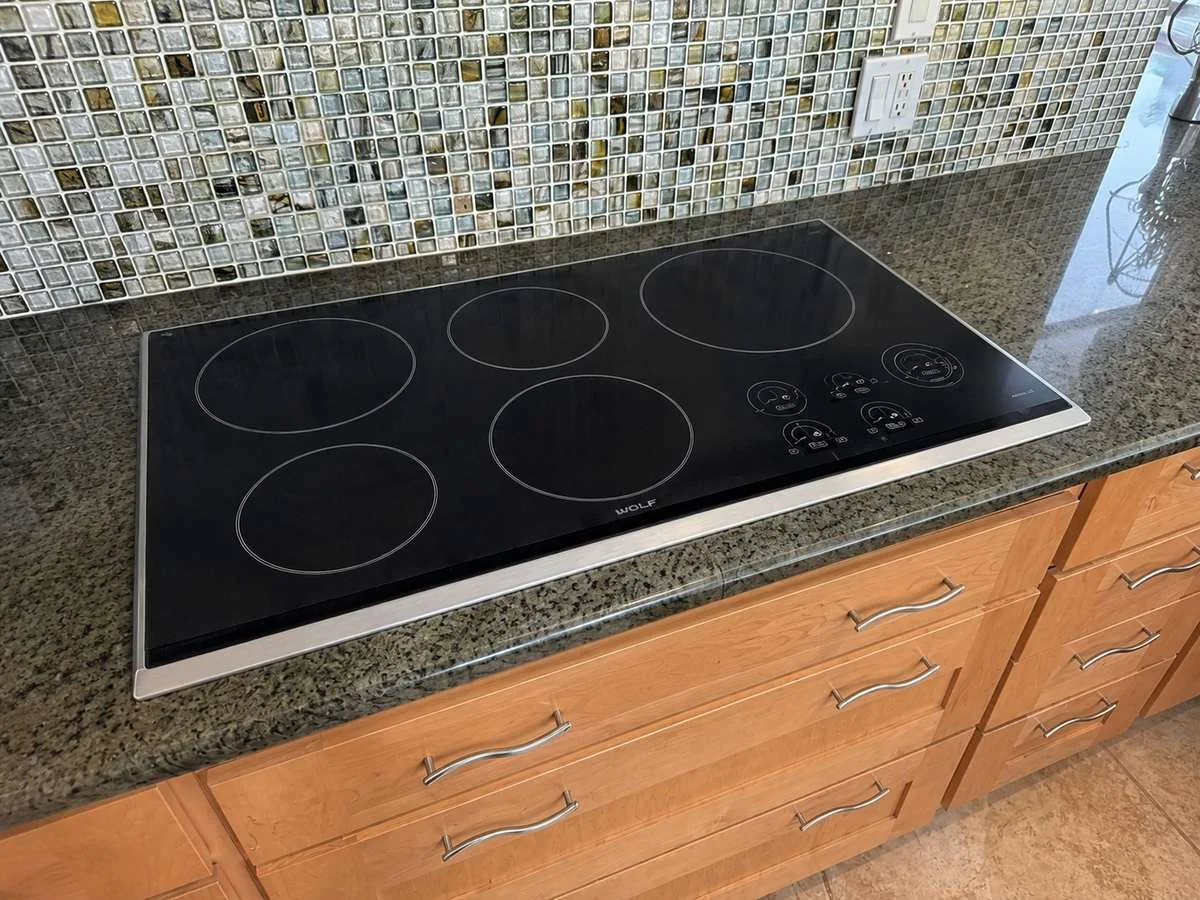
A cooktop that won't turn on isn't automatically a broken cooktop. The outlet, the connection, the breaker and the wiring all sit between the panel and the glass — checking those first is what kept this from becoming a control-board quote.
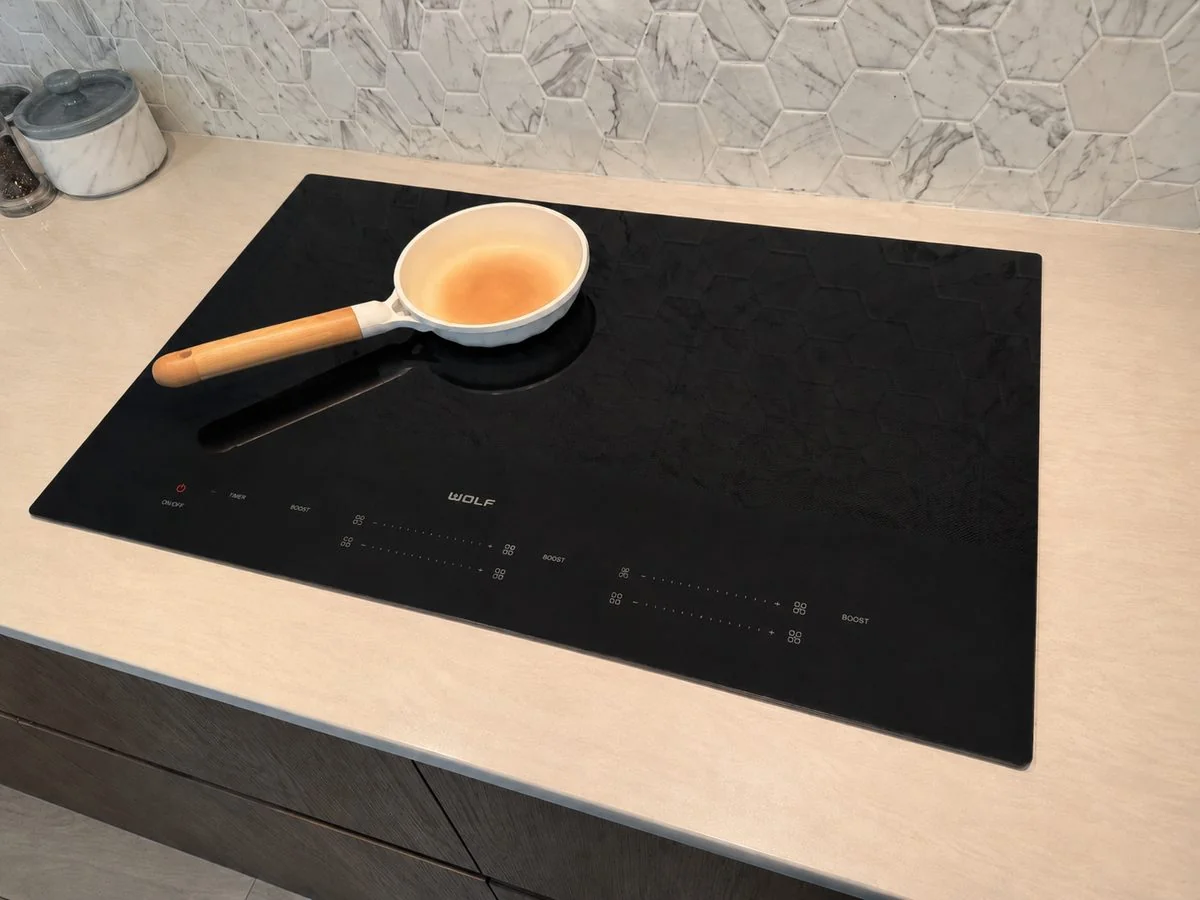
Several zones dying together almost always means one shared component rather than several separate failures — typically the control board, a power module, a sensor or a supply connection.
Book It
Call and describe the symptom — clicking, dead zones, no power — or leave your number and a dispatcher will call you back with a time window.
Service Areas
We repair Wolf cooktop built-ins across these metro areas, with same-day appointments in most of them when you call before noon.
Don’t see your city? Call (404) 474-1374 and we’ll tell you whether we reach you.
Pricing
No hidden fees, and nothing starts until you approve a firm quote.
Other Appliances
Questions